What the three tiers actually are
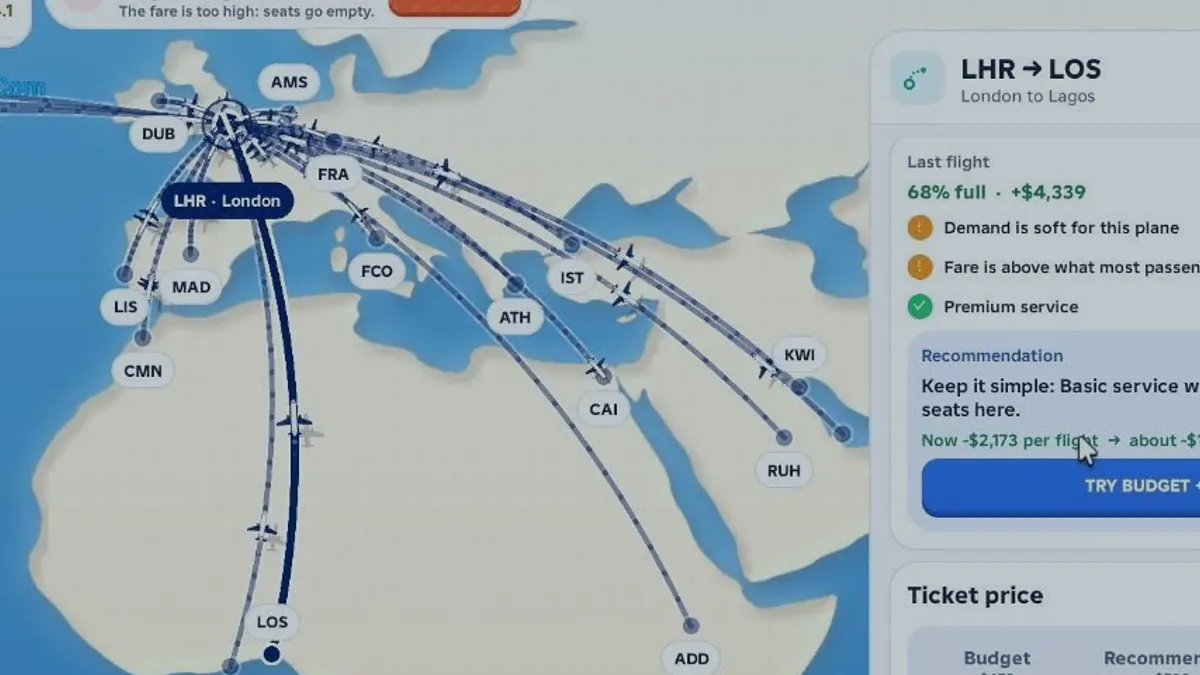
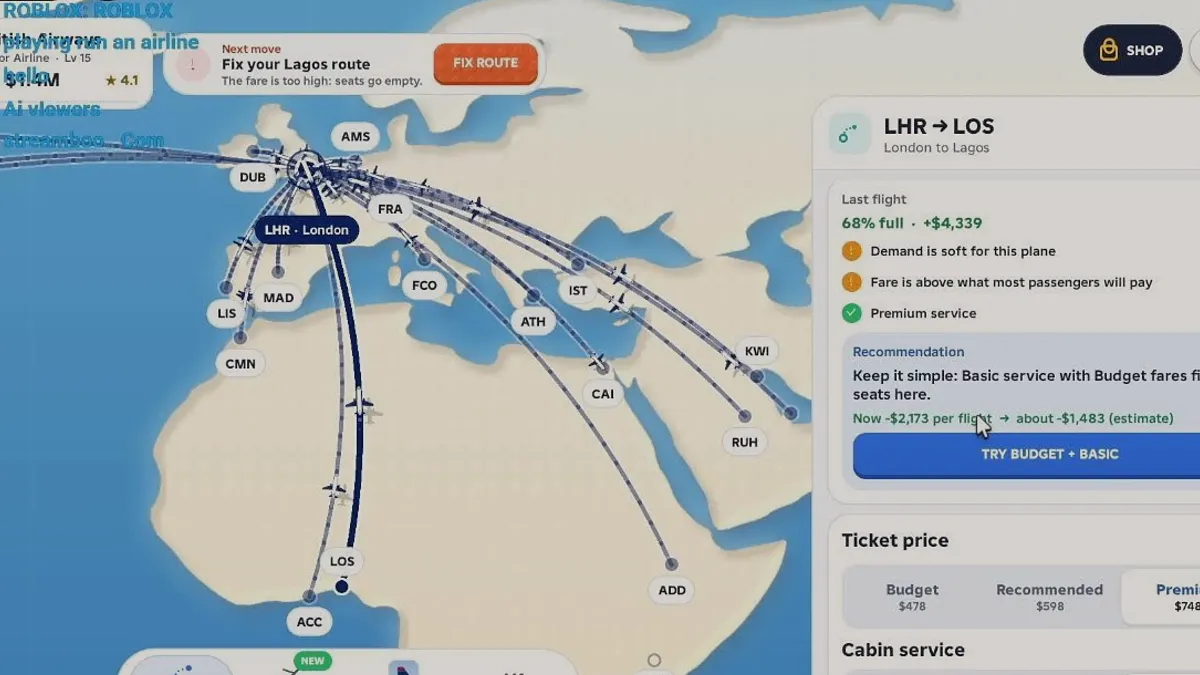
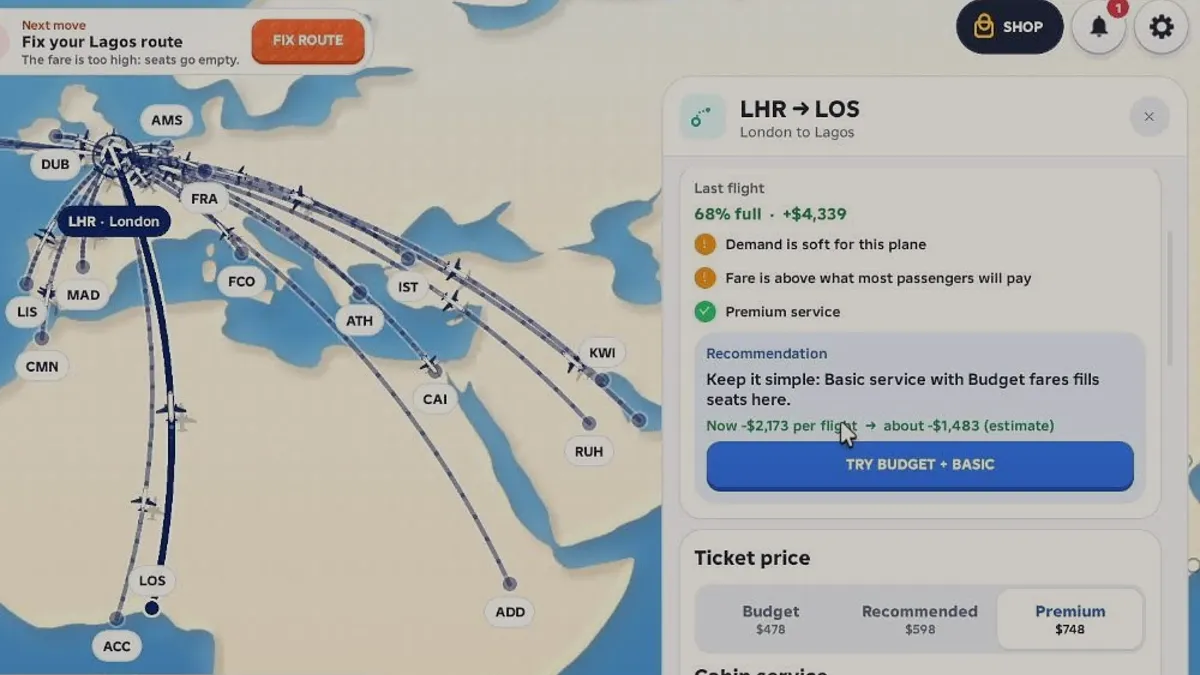
The route card shows three named prices: budget, recommended and premium. They are not cosmetic labels — each one changes revenue per passenger and therefore the load factor the route can sustain.
On the reviewed London–Lagos card the three tiers were $478, $598 and $748. The recommended tier sat exactly between the other two, which suggests it is the game's midpoint rather than a demand-optimal price.
- Budget fare
- $478
- Recommended fare
- $598
- Premium fare
- $748
- Last flight load
- 68% full
- Last flight cash
- +$4,339
Why the recommended fare was still too high
The same card carried two warnings: demand was soft for that aircraft, and the fare was above what most passengers would pay. The game's recommendation was to keep it simple with basic service and budget fares, estimating a move from -$2,173 to about -$1,483 per flight.
That combination is the key pricing lesson in this game: a fare can be inside the offered range and still be above willingness to pay. The tier list is a menu, not a recommendation.
Choosing a tier
| Target | What you observe | Tier to try | Reason |
|---|---|---|---|
| Load factor below target | Cabin consistently under-filled | Budget | Lower price is the only lever that adds passengers directly |
| Load factor stable and positive | Cabin fills at the middle tier | Recommended | Keeps revenue without risking the cabin |
| Cabin filling near capacity | Very high load factor with positive cash | Premium | Demand exceeds supply, so price can rise |
How to run a clean pricing test
Pick one route, keep the aircraft and service fixed, and change only the fare tier. Run one full flight, then compare load factor and cash against the previous run.
If the lower fare fills the cabin but the cash result falls, demand was not the constraint. If the lower fare fills the cabin and cash rises, the old fare was above willingness to pay — which is exactly what the Lagos warning described.
Fare questions
Is premium ever the right choice?
Yes, when a route fills reliably at the lower tiers. Premium only works when demand exceeds the seats you have; on a route that is already under-filled it accelerates the loss.
Do fares change by themselves?
No automatic repricing was visible in the reviewed sessions. The card keeps the fare you set until you change it, which is why an old premium fare can keep losing money for many flights.
What does the recommended fare represent?
It is the middle tier the game presents as a default. It is not derived from your route's observed demand, so treat it as a starting point for the first flight only.
Should I match a competitor's fare?
The game mentions rival airlines and rankings, but no competitor fare comparison was visible on the route card. Price from your own load factor rather than from an invisible competitor.
Sources and references
- Run an airline — official Roblox experience page
Supports the game identity, creator, release date, server size, genre and the published feature list quoted on this site.
Accessed - Roblox Games API — universe 10768550253
Supports visit count, favourites, active players, maximum server size, genre tags and the created/updated timestamps used in the snapshot table.
Accessed - Roblox votes API — universe 10768550253
Supports the 1,432 up / 208 down vote counts behind the 87.3% approval figure. Approval is computed, not published by Roblox.
Accessed - Roblox game passes API — universe 10768550253
Supports the six pass names and the effect wording quoted in the monetisation pages. It does not publish prices.
Accessed - Creator profile — monkeytherobloxdev
Confirms the creator account behind the experience. The profile itself carries no studio or support page.
Accessed - RUN AN AIRLINE FOR THE FIRST TIME:O — Zzzenvy
Public first-session recording used for the create-airline flow, the ATR 42-600 fleet panel (48 seats, 1,300 km, 500 km/h) and the DXB ↔ KWI 854 km / 3h example. Frame text only; no developer statement.
Accessed - ROBLOX playing run an airline — Krakenking17
Public live recording used for the LHR → LOS route card: fare tiers $478/$598/$748, 68% load, +$4,339 last flight, -$2,173 to -$1,483 recommendation, and cabin service at $3/$9/$20 per seat.
Accessed