YouTube

Network
Routes: read the card before you add a line
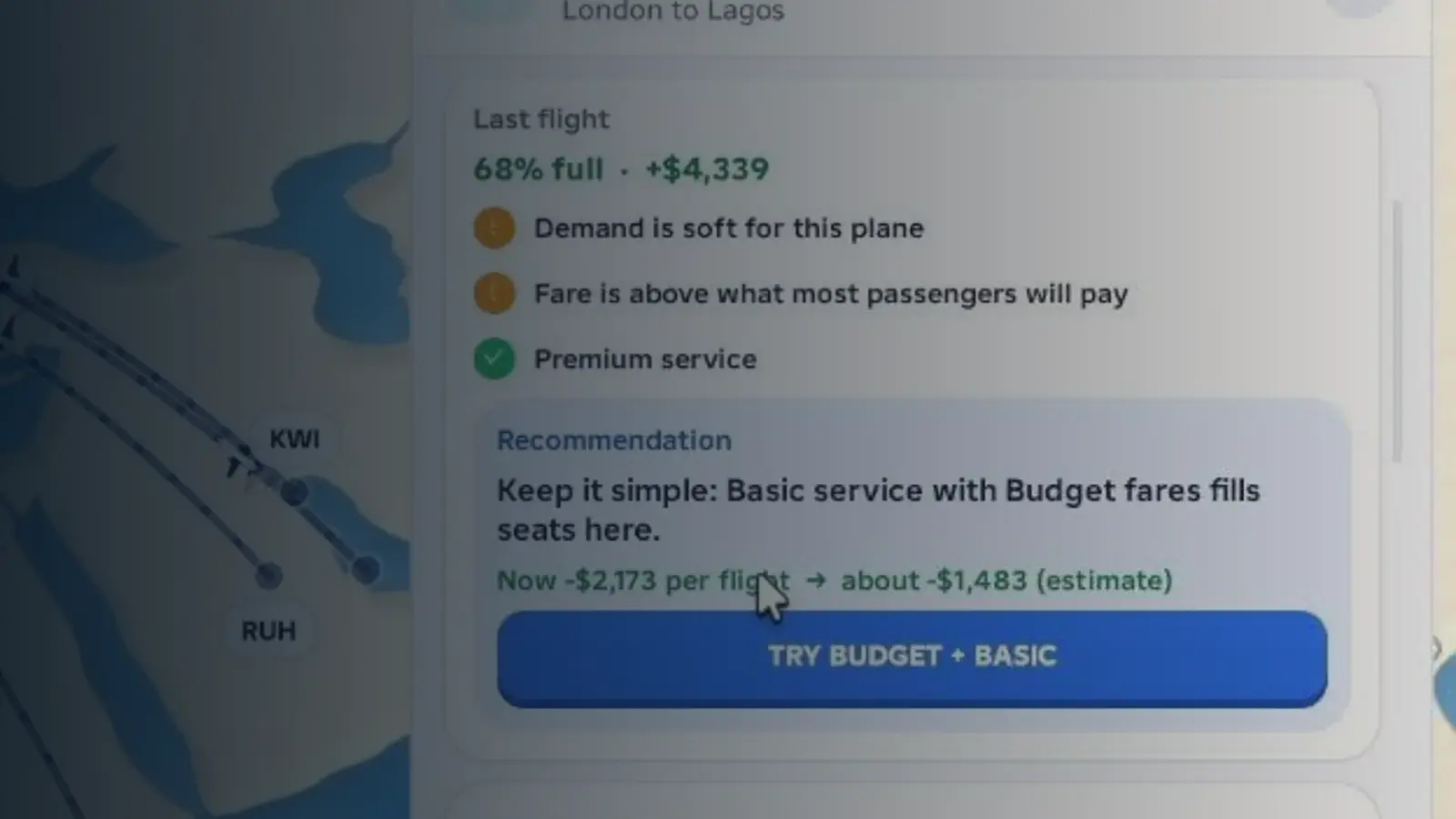
Every route opens a card showing the last flight's load factor, its cash result, warnings about demand and fare, and a recommended fix. The reviewed London–Lagos card is the clearest example: 68% full, +$4,339 on the last flight, yet flagged because the fare sat above what most passengers would pay.
Fare tiersBudget, recommended, premium
Load factorHow full the cabin was
Sector lengthCash per hour, not per flight
Watch and verify
See a route card being read in a live session
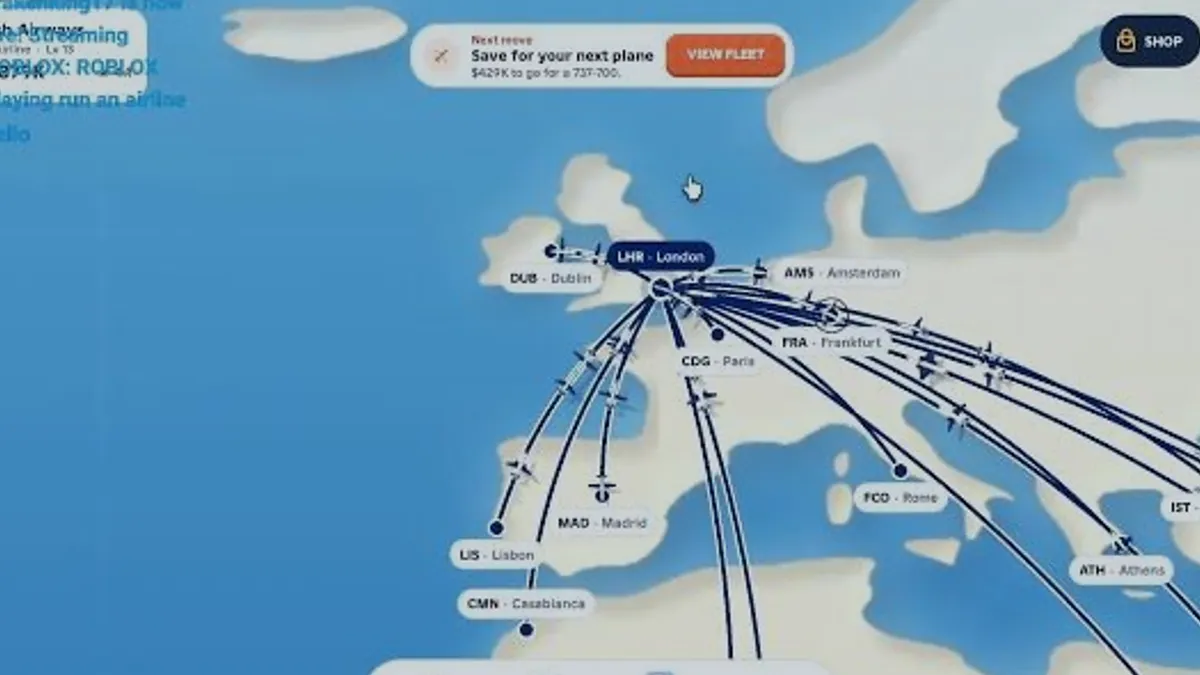
This recording shows the map, the route card and the in-game recommendation for a route whose fare was set too high. Pause on the card and compare it with the numbers quoted in this section.
How this section is organised
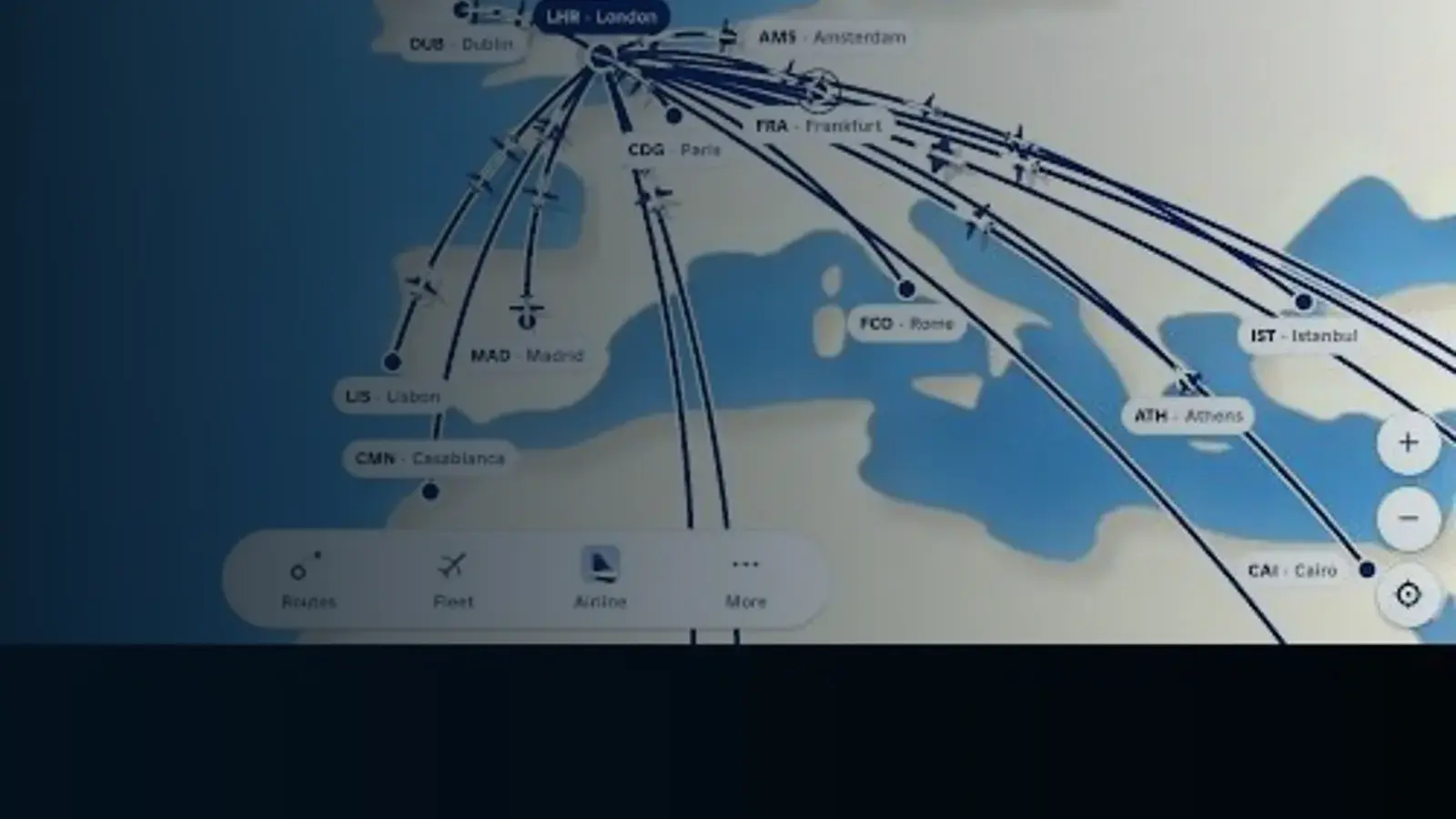
The map is the main screen. Airport badges sit on the world map, your hub is highlighted, and each opened route draws a line with a small aircraft on it. Tapping a badge or a line opens the route card, which is where every decision in this section starts.
The card reports what actually happened on the last flight and what the game thinks you should change. This section explains how to read those two things together, how fare tiers and cabin service interact, and when a route should be cut rather than repaired.
Sources and references
- Run an airline — official Roblox experience page
Supports the game identity, creator, release date, server size, genre and the published feature list quoted on this site.
Accessed - Roblox Games API — universe 10768550253
Supports visit count, favourites, active players, maximum server size, genre tags and the created/updated timestamps used in the snapshot table.
Accessed - Roblox votes API — universe 10768550253
Supports the 1,432 up / 208 down vote counts behind the 87.3% approval figure. Approval is computed, not published by Roblox.
Accessed - Roblox game passes API — universe 10768550253
Supports the six pass names and the effect wording quoted in the monetisation pages. It does not publish prices.
Accessed - Creator profile — monkeytherobloxdev
Confirms the creator account behind the experience. The profile itself carries no studio or support page.
Accessed - ROBLOX playing run an airline — Krakenking17
Public live recording used for the LHR → LOS route card: fare tiers $478/$598/$748, 68% load, +$4,339 last flight, -$2,173 to -$1,483 recommendation, and cabin service at $3/$9/$20 per seat.
Accessed
Official pages
The public experience page is the authority for the current build and its feature list.
Choose a route question
Three route problems, three different pages.
Which route next?
Match a sector to the aircraft you already own instead of the map's busiest city.
Open route planningWhat fare should I set?
The card gives three tiers; the gap between them is your pricing room.
Open fares and pricingWhy is it always half empty?
Separate demand limits from fare limits before cutting the route.
Open load factorFeatured route guides
Planning, pricing, demand and repair, in that order.
All route guides
Every published page in the routes section.
Planning
Run an Airline Route Planning: Match the Sector to the Aircraft
Plan routes by matching three numbers — sector distance, aircraft range and quoted block time — before looking at fares. A route is only worth pricing once the aircraft can reach it and repeat it inside your session.
Reviewed 2026-10-18Pricing
Run an Airline Fares: Budget, Recommended and Premium
Every route offers three fare tiers, and the gap between them is your pricing room. On the reviewed London–Lagos route that gap was $270 per seat, from $478 budget to $748 premium, while the game still recommended moving down rather than up.
Reviewed 2026-10-18Demand
Run an Airline Load Factor: Why Your Cabin Is Half Empty
Load factor is the percentage of seats actually filled, and it is the fastest diagnostic on the route card. A low figure points to either a fare above willingness to pay or an aircraft that is too large for the route's demand.
Reviewed 2026-10-18Route repair
How to Fix or Cut a Losing Route in Run an Airline
A losing route gets two repair attempts before it should be closed: cut the cabin service to basic and drop to the budget fare, then re-run. If the per-flight result is still negative after both, the aircraft is worth more on another line.
Reviewed 2026-10-18Pairs well with
Route questions
What does the route card actually show?
It shows the last flight's load factor and cash result, a short list of issues such as soft demand or a fare above what passengers will pay, a recommendation with an estimated change, and the three fare tiers with the current cabin service price.
Should I always pick the recommended fare?
No. The recommended tier is the game's starting point, and the reviewed London–Lagos card explicitly suggested moving below it to budget when the cabin was filling at 68% with premium service. Compare the load factor before accepting the middle tier.
How is cash per hour different from cash per flight?
A long sector can post a bigger per-flight number while earning less for each hour the aircraft is busy. Dividing the per-flight result by the quoted block time turns both into the same unit so a feeder and a long-haul route can be compared.
When should a route be closed?
Close it when two fare reductions and a service cut still leave the per-flight result negative, or when the aircraft would earn more on a route you already know. The game's own warning only tells you what is wrong, not whether to abandon the line.
Turn the card into a number
Enter the fare, seats, load factor and cost you can see and get the break-even load factor for that route.